

Travel backpack for Backpacking.
Choosing a travel backpack for backpacking? Learn what size, features, fit and organisation to look for, including advice for women travelling with a backpack.
Our Backpack Recommendations
For backpacking, we recommend going smaller rather than carrying a huge 60–70L backpack. A 40–45L bag is the sweet spot for most travellers: enough space for clothes, toiletries, electronics and travel essentials, while still being much easier to carry through airports, hostels and buses.
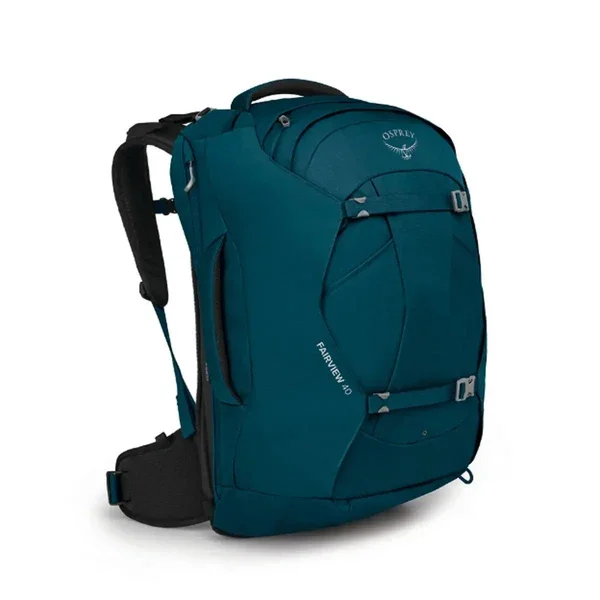
Best all rounder: Osprey Farpoint 40 / Fairview 40
Our top recommendation. The Farpoint 40 is a great choice for men, while the Fairview 40 is designed for women. They are comfortable, durable and give you enough space for a long backpacking trip without encouraging you to overpack.
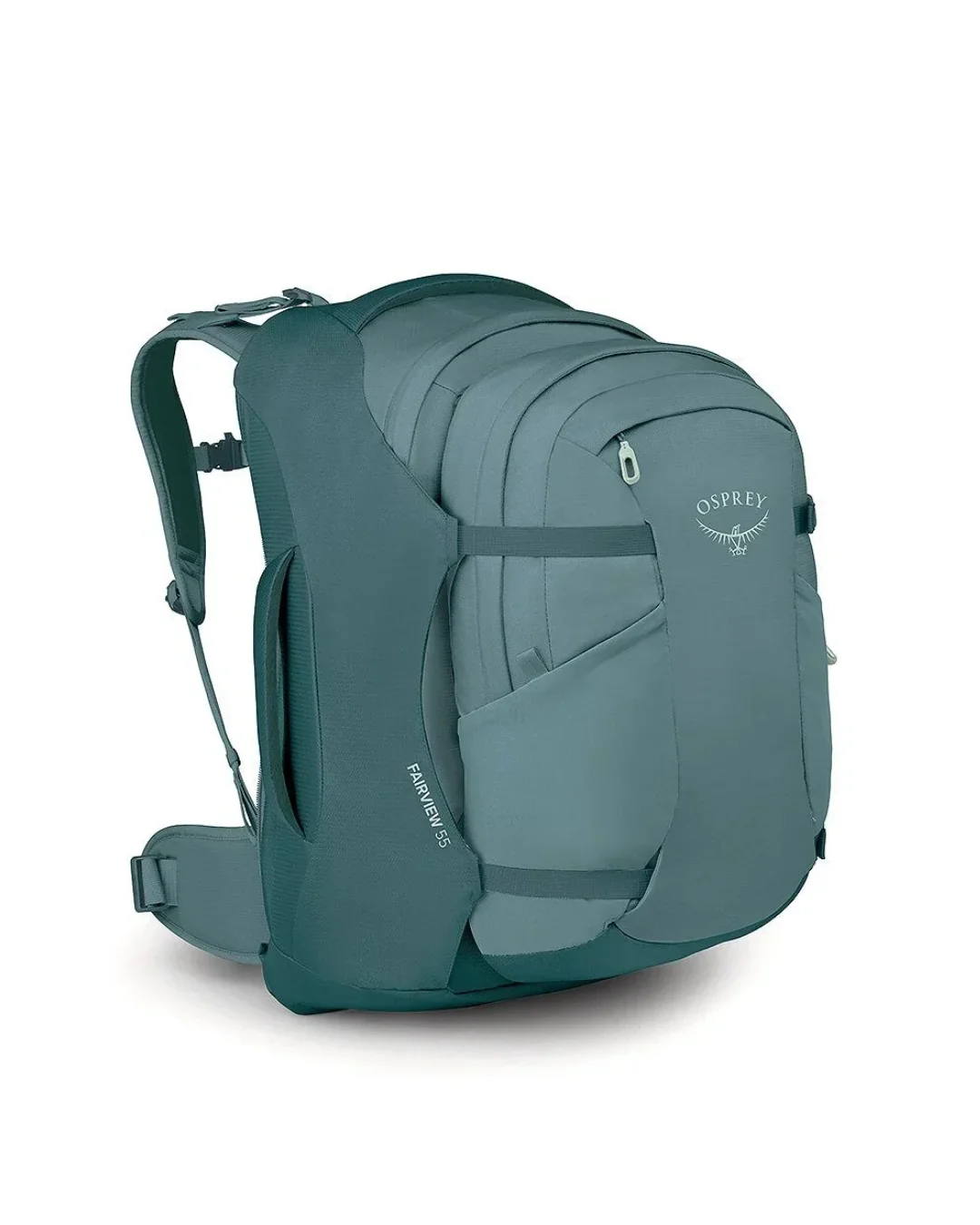
Best slightly bigger option: Osprey Farpoint 55 / Fairview 55
If you want extra space, go for the 55L versions. They give you more room while still being considerably more manageable than a traditional 65–70L backpack.
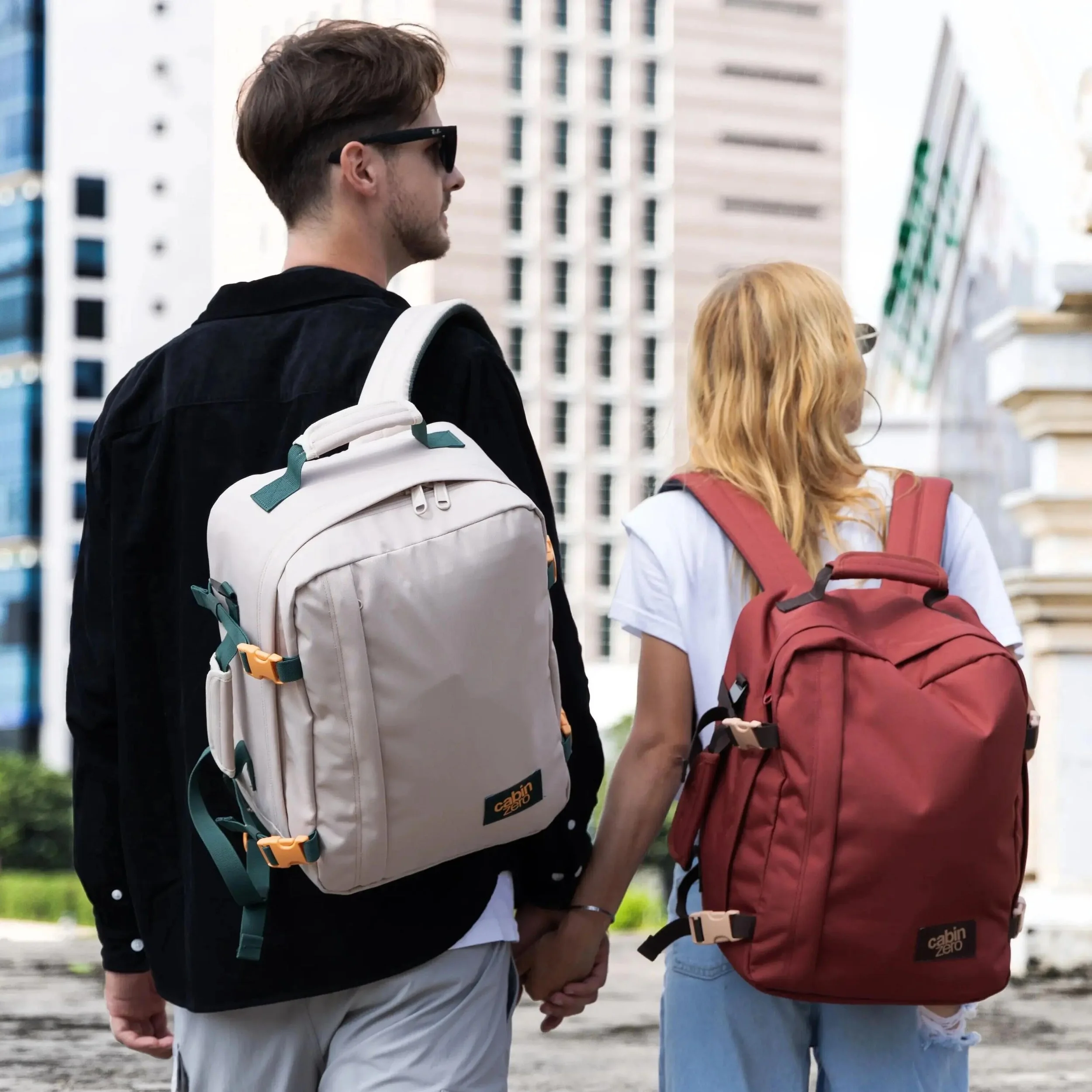
Best alternative: CabinZero Classic 44L
A good lightweight option if you want something simpler and generally cheaper than Osprey.
For women: Osprey Fairview 40
It is designed around a women’s body shape, with a more suitable torso length, harness and hip belt, making a noticeable difference when carrying your bag for longer periods. If you want a little more space, choose the Fairview 55.
Our advice: If you can fit everything you need into 40–45L, choose it over a bigger bag. You will appreciate carrying less once you're moving between destinations every few days. You end up wearing the same few pieces of clothes over and over again anyway!

How to Choose a Travel Backpack for Backpacking
Your backpack is going to be with you for a lot of your trip.
On buses. On trains. In hostels. Walking down streets looking for somewhere you booked five minutes ago. Probably sitting on the floor of an airport at some point too.
So choosing a travel backpack is worth getting right.
You do not need the biggest backpack you can find. In fact, taking too much stuff is one of the easiest ways to make backpacking harder than it needs to be.
What size travel backpack should you get?
For most backpackers, somewhere around 40 to 60 litres is a useful starting point.
A smaller backpack can be great if you pack light. A larger one gives you more room but makes it easier to bring things you do not actually need.
Think about your trip rather than simply buying the biggest bag available.
A few weeks travelling through warm countries is very different from six months travelling through several climates.
Carry-on or larger backpack?
A carry-on-sized backpack can make travelling much easier.
You can avoid checking luggage on some flights, move around more easily and spend less time waiting at baggage carousels.
The trade-off is space.
If you are travelling through hot countries and packing mostly lightweight clothing, travelling with a smaller backpack is much more realistic than if you need clothes and equipment for several different climates.
Always check the airline's current cabin baggage dimensions and weight limits before flying.
What makes a good backpack for travel?
Comfortable straps
You might only carry your backpack for 20 minutes at a time.
You might also end up walking across a city for two hours with it.
A proper adjustable harness, padded shoulder straps and a comfortable hip belt can make a huge difference.
Front opening
A backpack that opens more like a suitcase can be much easier to organise than one that only opens from the top.
You can actually see your clothes instead of digging through everything to find the one T-shirt you packed at the bottom.
Useful compartments
You want enough organisation to keep things easy to find without having a separate pocket for absolutely everything.
A laptop compartment, smaller valuables pocket and sensible main compartment are usually enough.
Strong zips
It sounds boring.
It matters.
Your backpack is going to be opened and closed constantly, so good zips and durable construction are worth prioritising.
Water resistance
Your backpack does not necessarily need to be completely waterproof, but some water resistance and a rain cover can be useful when travelling through tropical climates.
Travel backpack for women
Women's travel backpacks are not simply smaller versions of men's backpacks.
Fit matters.
Look for a backpack with adjustable torso length and straps that can be positioned comfortably for your body.
Some brands offer women's-specific designs with different harness shapes.
The best backpack is the one that fits you properly, regardless of what the label says.
If possible, try a loaded backpack on before buying it.
How much should a travel backpack weigh?
The lighter the better, within reason.
Remember that the backpack itself is part of the weight you have to carry.
A very heavy bag with lots of features might look impressive when it is empty, but you will notice the weight after a long day of travelling.
Pack the essentials first and work from there.
What should you pack?
For a typical warm-weather backpacking trip:
Lightweight clothes
Underwear
Swimwear
Comfortable shoes
Flip-flops
Toiletries
Phone and charger
Power bank
Travel documents
Small first-aid kit
Any necessary medication
Lightweight rain jacket
Microfibre towel
Padlock
You can buy plenty of things once you arrive.
You do not need to pack for every possible situation before you leave home.
The biggest backpacking packing mistake
Taking too much.
You will probably wear the same few outfits repeatedly anyway.
And if you really need something you forgot, there is a good chance you can buy it wherever you are travelling.
A backpack should make travelling easier, not become something you have to manage all day.
Should you use packing cubes?
They can be useful.
They make it easier to separate clothing and keep your backpack organised, particularly when you are moving between destinations regularly.
They are not essential, though.
The important thing is having a system that means you know where your stuff is.
Your backpack should fit your trip
There is no single perfect travel backpack.
A two-week trip through Thailand, a six-month trip through Southeast Asia and a year travelling through different climates all require different things.
Start with your route.
Then work out what you actually need to carry.
Plan the route first. Pack for the trip you are actually taking.
Ready to work out where you're going next? Start planning your backpacking trip with Cowboy.
Ready to start planning? Download Cowboy and start building your backpacking route today.